Mattress materials & construction
Inside the Vispring Regal Superb: Materials, Support, and Construction
A mattress’s character is made in layers: the spring system beneath, the comfort materials above, and the workmanship that holds the whole design together. The Vispring Regal Superb offers a thoughtful case study in how to assess those elements—and how to decide whether its particular approach to support suits the way you sleep.
Published October 17, 2026
Luxury in a mattress is not a single sensation, nor can it be read reliably from a firmness label. One sleeper’s idea of sumptuous may be a softly yielding surface; another’s is a buoyant, steady feel that makes changing position effortless. Beneath both impressions are decisions about materials, spring response, upholstery, construction, and fit. Understanding those choices is more useful than treating “luxury” as a synonym for “soft” or assuming that a higher price guarantees a better match.
The Vispring Regal Superb is a useful model to consider through this more discerning lens. Rather than reducing it to a ranking or a promise of perfect sleep, this guide looks at the questions a careful shopper should ask: What is known about the materials and construction? How might the spring system influence support? What should you test in person, and what details should you confirm with the retailer or manufacturer before making a decision?
Mattress specifications can vary by market, size, and product revision. For that reason, use this article as a framework for evaluation, not as a substitute for the current specification sheet. Confirm the exact materials, spring configuration, comfort options, dimensions, and care requirements for the Regal Superb being offered to you.
Start with the whole construction, not the firmness label
A firmness rating compresses a complicated experience into a simple word or number. It can be a useful point of reference, but it does not describe how deeply a mattress accommodates the shoulders and hips, how quickly it responds when you move, or whether its support feels consistent across the surface. Two mattresses called “medium” may feel quite different because their internal layers are arranged and made differently.
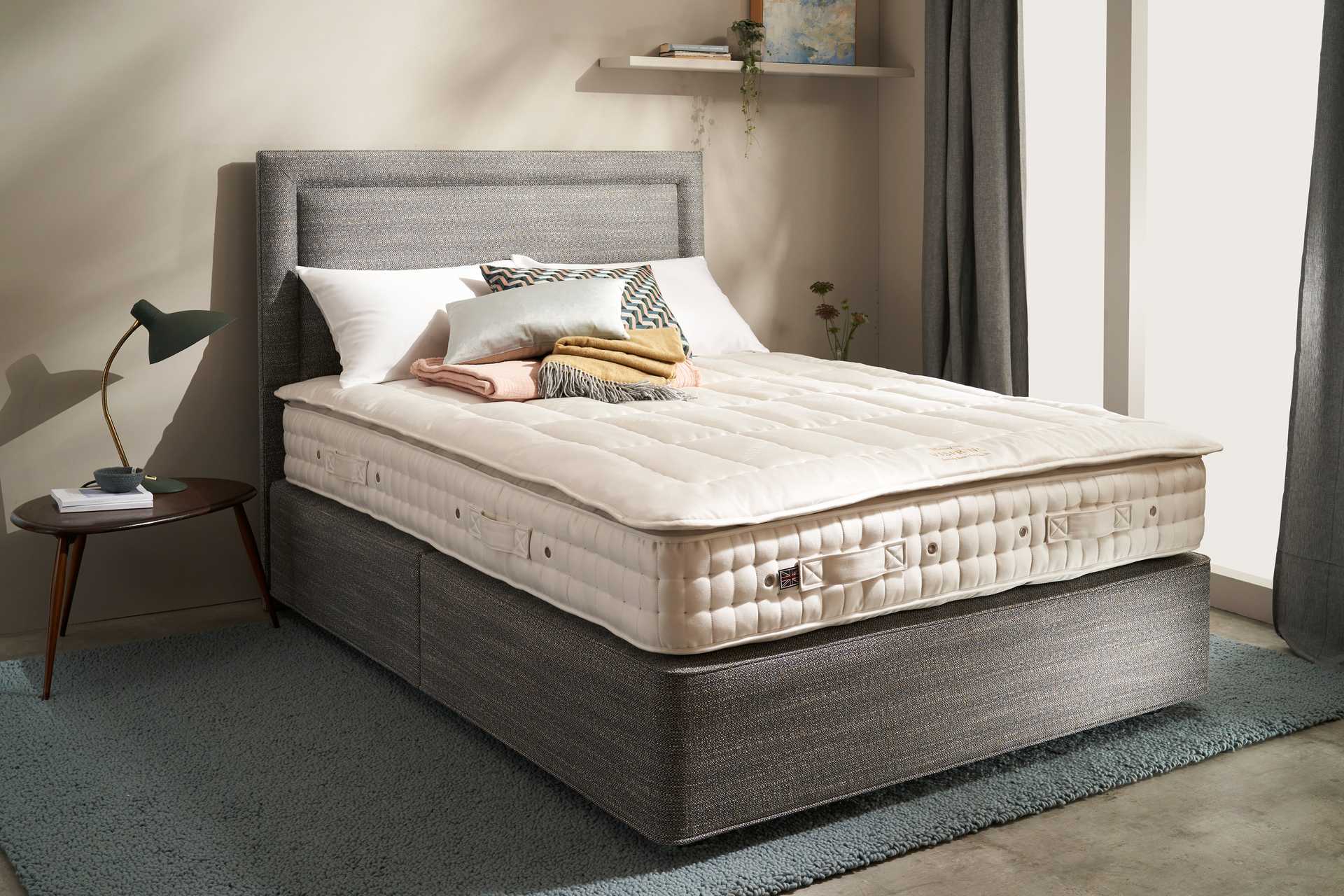
When exploring Vispring mattress construction, think in three connected parts. The support core establishes the bed’s underlying response. Upholstery layers shape the initial comfort and the transition into that support. Finally, the cover, quilting, tufting, and edge construction affect surface feel, stability, and the way the mattress holds together. Each part contributes to the impression you experience, but none tells the entire story in isolation.
This is particularly important with a traditionally constructed mattress. Its comfort may come from the interaction of several materials rather than from one thick layer of a single foam. Resilience, compression, air movement, and the way the upper layers settle all matter. Ask for a current, itemised materials description rather than relying on broad terms such as “natural,” “handmade,” or “luxury.” Those words may signal an approach, but they do not explain the precise composition of the mattress in front of you.
Materials: what to look for and what to ask
Materials matter because they influence how a mattress feels under load and how it manages everyday use. Wool, cotton, hair, latex, and foam each have distinct characteristics, but the result depends on quality, quantity, placement, and construction. A material name alone is not a performance guarantee. For the Regal Superb, request the current product specification and note which materials appear in the comfort upholstery, which form part of the spring unit, and how those layers are assembled.
Comfort upholstery and surface feel
Upholstery materials sit above the support core and influence how the body meets the mattress. They can soften the first impression, provide a gradual transition toward firmer support, and affect the sense of warmth or airflow at the surface. A mattress with substantial cushioning may feel inviting at first contact, but the relevant question is whether that cushioning remains comfortable after several minutes in your usual sleeping position.
Pay attention to the difference between surface softness and deeper support. If the top feels plush while your hips sink substantially farther than your shoulders, the overall fit may not feel balanced to you. Conversely, a surface that initially seems firm could become comfortable when your weight is distributed and the materials respond. Give the mattress enough time in a relaxed position to assess the whole experience rather than judging it with a brief hand press.
Natural fibres and practical expectations
Natural fibres are often chosen for their tactile qualities and their potential to manage moisture and temperature. Their performance varies with the fibre, its preparation, the amount used, and the rest of the mattress design. A natural-material claim should prompt useful questions: Which fibre is included? Where is it positioned? Is it blended with other materials? What maintenance does the manufacturer recommend? These are more informative than assuming that natural materials automatically mean cooler, more durable, or more suitable for every sleeper.
Some mattresses may also use materials selected for resilience or spring-like recovery within the upholstery. If a specification lists such a component, ask how it contributes to the feel and whether it is present throughout the mattress or in a particular layer. The point is not to favour one material category, but to understand what the mattress is made of and whether its intended qualities align with your preferences.
Support begins with the spring system
In a pocket-spring mattress, individual springs are housed separately so they can respond with some independence to pressure. The practical effect depends on more than spring count. Wire characteristics, spring shape, tension, arrangement, mattress size, and the upholstery above the springs can all influence the way the bed responds. A larger number of springs, by itself, does not establish that a mattress will offer better alignment or feel more comfortable.
Ask the retailer to identify the spring system used in the specific Regal Superb configuration you are considering. Confirm whether the spring unit changes by size or comfort option, and ask how the manufacturer describes the support profile. If the mattress is available with different tensions, treat those choices as a starting point for testing rather than a simple mapping from body weight to firmness. Body proportions, sleeping position, personal comfort, and any pain or sensitivity can all affect what feels supportive.
Support is best understood as a relationship between the sleeper and the mattress. A useful fit generally allows the body to rest without a pronounced sense of pressure at the shoulders or hips, while avoiding an uncomfortable feeling of sagging through the middle. Side sleepers may be especially attentive to shoulder and hip accommodation; back sleepers may notice whether the lower back feels comfortably supported; stomach sleepers often prefer to avoid excessive sinking around the pelvis. These are practical observations, not medical diagnoses.
How construction shapes the feel
Construction determines how the layers work as a system. A well-designed mattress is not simply a spring core topped with a soft layer; the transition between components matters. When the upholstery and spring unit are suited to one another, the bed may feel composed rather than divided into a cushioned top and an unrelated support base. When they are not, a sleeper may notice abrupt changes in resistance or an uneven sensation across the surface.
Look closely at the mattress’s finish and ask how it is assembled. Tufting, stitching, borders, and side reinforcement can be part of a mattress’s construction, but their presence should not be treated as proof of a particular comfort level or lifespan. Ask what the details are designed to do, whether they are standard on the model, and what the warranty covers. Construction language is most valuable when it explains a concrete feature rather than serving as decoration in a product description.
Also consider whether the mattress is one-sided or designed to be turned, and whether it should be rotated. Follow the manufacturer’s instructions for the exact model. A turning routine that applies to one mattress may not apply to another, and lifting a heavy mattress incorrectly can cause strain. The correct care instructions are part of the ownership experience, not a minor footnote.
A considered in-store test
Testing a mattress is most useful when it resembles real sleep. Wear comfortable clothing, remove bulky outer layers, and lie down in your usual position. Spend several minutes on the mattress, then change position as you would at home. If you share a bed, test together: each person’s comfort matters, and movements on one side may be noticeable to the other.
- Notice pressure: Do your shoulders, hips, or other contact points feel compressed or uncomfortable?
- Assess alignment: Does your body feel supported without an obvious dip or forced arch?
- Try changing position: Can you turn easily, or does the surface feel as though it holds you in place?
- Check the edges: Sit and lie near the perimeter to understand how stable the edge feels for your needs.
- Consider temperature: A short showroom test cannot predict a full night, but you can note whether the surface feels warm or airy to you.
- Ask about the base: Confirm that the foundation or bed frame is compatible and meets the manufacturer’s requirements.
Do not let a fast demonstration or a salesperson’s firmness shorthand replace your own observations. If possible, ask about the trial period, return conditions, delivery access, removal of an existing mattress, and any fees before purchasing. Policies differ, and a showroom impression is not the same as sleeping on a mattress at home over time.
Fit for your sleep preferences
The right question is not whether the Regal Superb is universally comfortable, but whether its feel suits your body, habits, and expectations. Consider how you sleep most often, whether you wake feeling pressure in particular areas, whether you tend to sleep warm, and whether you prefer a responsive surface or a more enveloping one. Be specific about what you want to change from your current mattress. “More comfortable” is a starting point; “less pressure at my shoulder” or “easier to turn over” gives you something more useful to evaluate.
For couples, compromise need not mean choosing a vague middle ground. Compare how each sleeper responds to the same surface, and ask whether the mattress offers options that address differing comfort needs. If one person is much lighter or heavier, the same mattress can feel unlike itself on either side. Where possible, test side by side and discuss practical expectations, including motion, edge use, and the available size.
People with persistent pain, mobility concerns, or a medical condition may want advice from a qualified health professional about their individual needs. A mattress can affect comfort, but it should not be presented as a treatment or a guaranteed solution. Evidence and individual experiences vary, and marketing claims about curing pain deserve careful scrutiny.
A topper changes the surface, not the mattress underneath
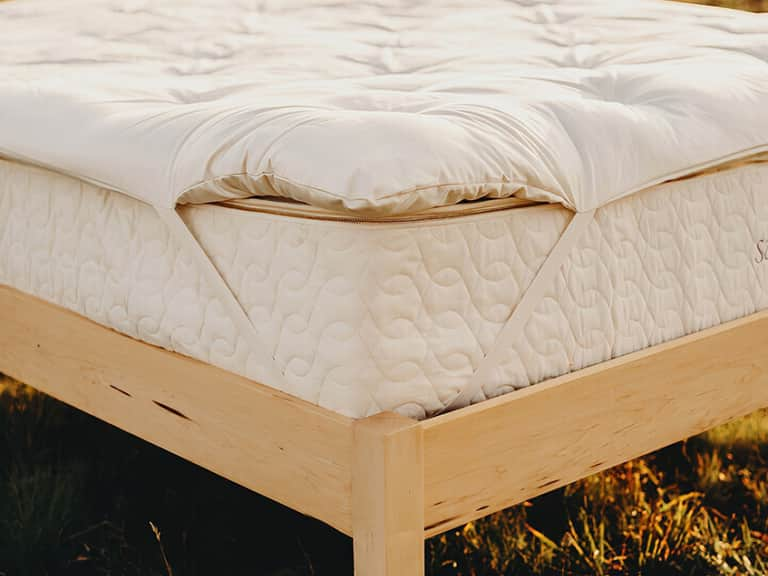
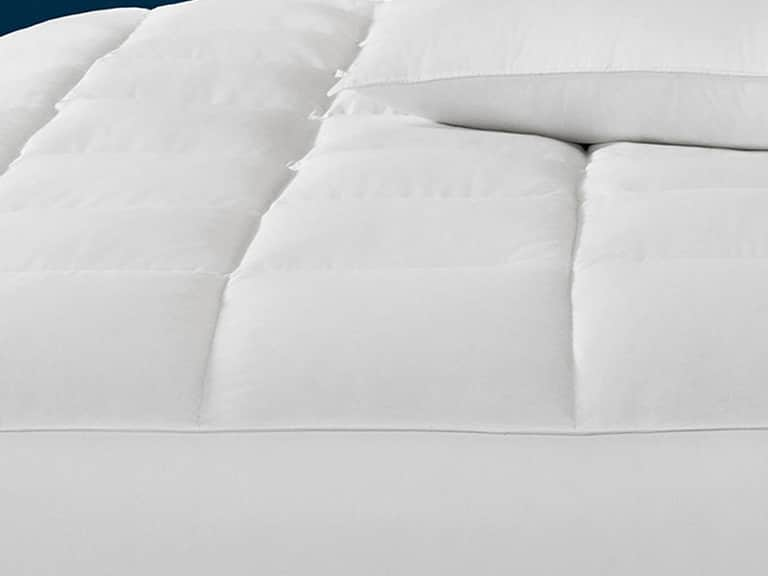
A topper can alter the first-contact feel of a bed, but it does not replace the mattress’s underlying support system. If the mattress is structurally worn or does not suit your body, adding a thick comfort layer may not resolve the deeper issue. It is worth testing the mattress on its own before deciding whether an extra layer is desirable.
For readers who want to explore a separate comfort layer, the Vispring Heaven Luxury Supreme Mattress Topper is described as a 3.9-inch topper made with British fleece wool, soft-needled British wool, and South American horsetail. Those materials and its added height may create a more cushioned surface, so consider how the extra loft could affect your overall feel, bedding fit, and ease of movement. It is an optional accessory, not a specification of the Regal Superb mattress itself.
Questions to take to a retailer
Premium mattress descriptions can be rich in evocative language and light on practical detail. A short list of precise questions helps keep the conversation grounded and makes it easier to compare models fairly. Ask for answers in writing where possible, especially when details relate to construction, delivery, or warranty coverage.
- What are the current materials in each layer of this Regal Superb, and are they different across sizes or comfort options?
- What spring system and tension are included in the exact model on display?
- Is the mattress one-sided or reversible, and what rotation schedule does the manufacturer recommend?
- Which base types are compatible, and are there specific spacing or support requirements?
- What are the warranty terms, exclusions, and requirements for keeping the warranty valid?
- What are the delivery, trial, exchange, and return conditions in this location?
- How should the mattress be cleaned, aired, or protected, and which care practices should be avoided?
A measured conclusion
The Vispring Regal Superb is best evaluated as a complete construction rather than as a name, a price point, or a firmness label. Materials contribute to the surface and the way it responds; the spring system provides a central part of its support; and workmanship, upholstery, and the correct foundation influence how those elements perform together. The most meaningful assessment comes from combining the current specification with a patient, realistic test.
For a confident decision, verify the exact Regal Superb details offered in your market, identify the characteristics that matter most to you, and compare those with your own experience on the bed. Luxury is not an abstract standard that every sleeper must share. In practical terms, it is a mattress whose materials, construction, and feel make sense for the person who will use it—and whose care, fit, and ownership terms are clear before it reaches the bedroom.