The informed sleep guide
How to Evaluate Organic Mattress Certifications and Construction
An organic mattress is not a single material, nor is it a promise that every component has the same origin or credentials. The most useful evaluation begins layer by layer: identify what is inside the bed, learn which certification applies to each material, and consider how the construction will perform in your home.
Published November 2, 2026
The language of an organic mattress can sound beautifully simple: natural latex, organic wool, cotton cover. Yet a finished mattress is a carefully assembled object, and its components may have different suppliers, processing methods, and certifications. A label on one layer does not automatically certify the whole bed. A cotton cover, for instance, may carry a textile certification while the latex core has a separate credential and the wool has another—or no independent certification at all.
That distinction is not a reason to distrust the category. It is an invitation to look closer. A thoughtful comparison considers the provenance and treatment of materials, the standards behind any claims, the arrangement of layers, and the practical realities of ventilation and care. The result is a more grounded way to assess a mattress than relying on a broad phrase such as “eco-friendly” or “chemical-free.”
This guide explains common certification terms, how they relate to mattress components, and what construction details deserve attention. It is educational rather than a substitute for a certification body’s current rules or a manufacturer’s documentation; standards can change, and precise claims should always be verified against the relevant certificate and product specification.
Begin with the materials, not the headline
Before weighing labels, ask what the mattress is actually made of. Most designs can be understood as a set of functional layers: a support core, comfort layers, a cover or casing, and sometimes a quilted finish. The names and order vary, but each component contributes something different to the feel, support, breathability, and maintenance of the bed.
- Core: The central support structure may be latex, a coil system, or another material. Its depth and design influence resilience, stability, and the overall character of the mattress.
- Comfort layers: These sit closer to the sleeper and shape cushioning and pressure distribution. They may use latex, wool, cotton, or other materials.
- Cover and quilting: The casing encloses the mattress. Quilting may add a surface layer of wool or other fibers and can affect the feel and temperature experience.
- Fire barrier and joining materials: A mattress may use a barrier or other components that are not immediately apparent from a short product description. Ask what is used and how it is incorporated.
Request a complete materials list, ideally identifying each layer by material and approximate thickness or weight. “Made with organic materials” is less informative than a clear statement describing which materials are organic, where they appear, and what evidence supports the claim. If a description names an organic cotton cover and a latex core but says little about the remaining components, that is a prompt for clarification—not proof of a problem.
What mattress certifications can—and cannot—tell you
Certifications are useful when read precisely. They are not interchangeable badges, and each standard has its own scope. One may focus on the origin and processing of a particular raw material; another may address textile processing or chemical testing. A certificate may apply to a supplier, facility, material, or finished product. The name alone does not tell you which.
When a manufacturer makes a certification claim, look for the standard’s full name, the certified entity or material, and a valid certificate or listing that can be checked. Ask whether the credential covers the exact mattress model and current construction. If a company refers to a certified material, that is not automatically evidence that every component—or the finished mattress as a whole—is certified to the same standard.
Be equally attentive to the difference between a certification and a general marketing description. Terms such as “natural,” “clean,” and “non-toxic” may be used in different ways and do not, by themselves, explain the material’s source, manufacturing process, or testing basis. A specific, verifiable claim is more meaningful than an expansive adjective.
GOLS and organic latex
The Global Organic Latex Standard, commonly abbreviated GOLS, is associated with organic latex. When a mattress uses this term, ask which latex component is covered and whether the specific claim can be verified through current certification documentation. A latex mattress may contain more than one layer, and the material description should make clear whether the claim applies to all latex layers or only some of them.
It is also worth distinguishing the latex material from the mattress as a finished object. A certified latex layer does not, on its own, establish the organic status of the cover, wool, thread, or other components. Nor does the word “latex” alone indicate that it is organic: latex describes a material, while organic claims depend on sourcing and the applicable standard.
Construction details matter alongside certification. Latex can be arranged in one substantial core or in several layers with different firmness levels. A layered design may allow a more tailored feel or, in some cases, adjustments over time. A single core may offer a simpler construction. Neither format is inherently superior for every sleeper; the relevant questions are how the layers are made, how they are supported, and whether the feel suits the person using the mattress.
GOTS and certified textiles
The Global Organic Textile Standard, or GOTS, relates to organic textiles and their processing. When it appears in a mattress description, identify the textile component it refers to—often cotton fabric or another textile—and confirm the scope through the supplier’s documentation or the standard’s current public resources. A GOTS claim for a fabric should not be casually expanded into a claim about the latex core or the entire mattress.
Fiber content and textile certification are separate details. A cover described as cotton tells you the fiber named by the manufacturer; a certification claim may provide further information about the material and relevant processing requirements. To compare two mattresses, note both the stated composition and the certification scope. If a seller uses a certification logo but cannot explain which component it covers, ask for clarification before treating it as evidence about the whole product.
Some mattresses also use wool in quilting or as a barrier. The wool’s role, source, and documentation should be stated independently. Even when a component is natural in origin, that fact alone does not reveal the details of how it was raised, processed, or certified.
Read the label as a map of the mattress
A useful comparison turns product copy into a component map. For each layer, record the material, its position, its approximate thickness or weight, and any certification specifically claimed for it. This simple exercise makes omissions visible and prevents one appealing credential from overshadowing the rest of the construction.
| Component | Details to identify | Questions to ask |
|---|---|---|
| Support core | Material, layer count, thickness, and firmness options | Which certification, if any, applies to the core material? |
| Comfort layers | Material, placement, and whether layers can be rearranged | Are all layers made from the same material and covered by the same claim? |
| Cover and quilting | Fiber content, quilting fill, and whether the cover is removable | Does a textile certification apply to the cover, quilting, or both? |
| Barrier and assembly | Fire barrier, adhesives or fasteners, and construction method | What materials are used beyond the headline ingredients? |
| Care and support | Rotation, ventilation, cleaning, and warranty instructions | What maintenance is required to preserve the mattress? |
This record is especially useful when comparing mattresses that use similar materials but arrange them differently. One design may have a thick latex core and a light quilted surface; another may use several latex layers beneath a more substantial wool-and-cotton casing. The descriptions can sound alike while the physical experience, maintenance, and adjustment options differ considerably.
Construction details that shape everyday use
Layer order and firmness
In a layered mattress, position matters. A softer layer near the surface will generally produce a different initial feel from the same layer placed deeper in the bed. Ask how the manufacturer defines firmness, whether layers can be rearranged, and whether configurations differ by side. Firmness labels are not universal measurements, so a description such as “medium” is best treated as a starting point rather than a guarantee of how the mattress will feel to every body.
Ventilation and the bed base
Airflow is influenced by more than the material inside a mattress. The cover, quilting, layer design, room conditions, bedding, and supporting base all contribute to the sleep environment. Some manufacturers recommend a slatted platform or another ventilated foundation. Follow the specific guidance for the mattress, and make sure the base is compatible with its weight and construction. A poorly matched foundation can affect support as well as airflow.
Care and access
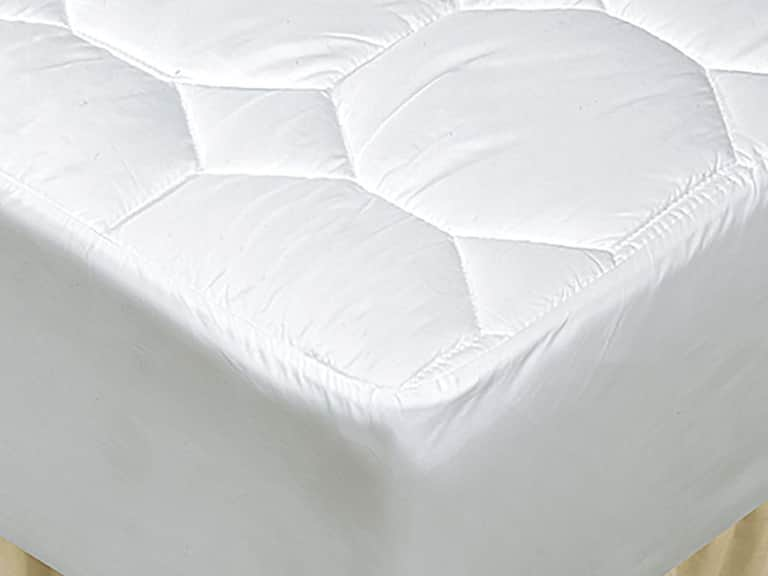
“Natural” does not mean maintenance-free. A removable, zippered casing may provide access to layers, but that does not mean it can be machine-washed. Wool, latex, and cotton may each have distinct care requirements. Check whether the cover is removable, whether it is washable, and what the manufacturer advises for stains, rotation, and ventilation. A fitted protector can help reduce exposure to spills and body oils, but it should fit properly and suit the intended sleep surface.
Adjustability and repair
Some designs allow layers to be replaced, rearranged, or customized, while others are assembled as a fixed unit. Ask what can actually be changed after delivery, who performs the adjustment, and whether replacement components are available. A modular design can be useful when preferences evolve, but its value depends on clear instructions and practical access to the components.
A construction example, considered carefully
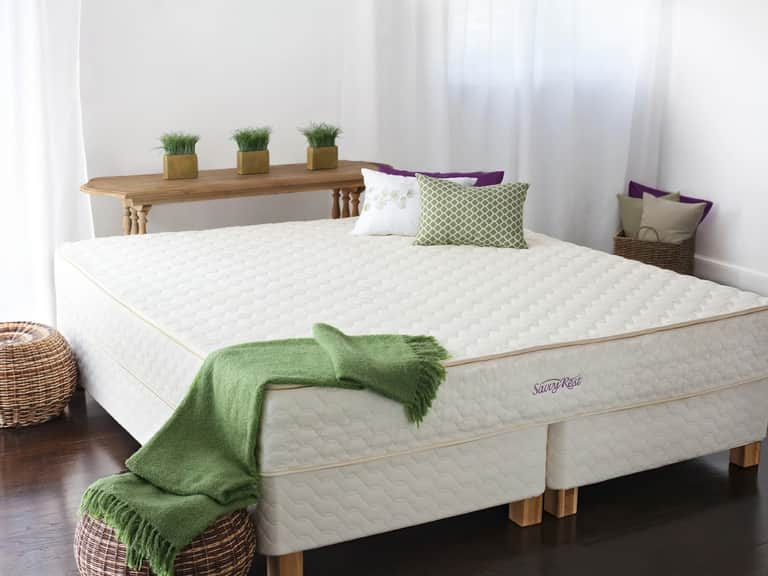
The Savvy Rest Serenity Latex Mattress illustrates why it helps to separate material description from certification scope. Its product information describes a 10-inch mattress with three latex layers, organic wool quilting, and an organic cotton casing; it also describes configurable layer firmness. The stated specifications identify GOLS certification for the latex and organic cotton and wool components. These are product claims to review against current documentation, rather than a reason to assume that one credential automatically covers every part of the finished mattress.
For a mattress with this kind of layered construction, a reader might verify which latex layers are covered by the cited certification, what documentation applies to the cotton and wool, and whether the available firmness configuration changes the materials or only their arrangement. It is also sensible to confirm the current care instructions, foundation requirements, and adjustment policy directly with the manufacturer. This is a method of evaluation, not a blanket endorsement: the correct mattress depends on individual comfort, support needs, and the fit of the full construction.
Questions that lead to clearer answers
When product descriptions leave gaps, a concise set of questions can bring the construction into focus. A transparent seller should be able to explain its claims without substituting broad reassurance for documentation.
- What are the materials in every layer, including quilting and any barrier?
- Which certification applies to each material, and can I review current documentation?
- Does the certification cover the raw material, a supplier or facility, a component, or the finished mattress?
- Are all layers of latex covered by the same certification claim?
- Is the cover removable, and what cleaning method is permitted?
- What type of base is recommended, and are there ventilation requirements?
- Can the layers be rearranged or replaced, and what are the conditions?
- Which parts of the mattress are covered by the warranty, and what care is required to keep that coverage valid?
A measured approach to “organic” claims
Organic certification can provide useful information about defined materials and processes, but it does not answer every question a sleeper may have. It does not, on its own, establish whether a mattress is comfortable, durable, supportive, or suitable for a particular household. Those are separate considerations, and they deserve their own evidence: a complete construction description, clear care instructions, trial or return terms where applicable, and a warranty that can be understood before purchase.
Nor should a certification be treated as a universal guarantee of health outcomes. A label describes compliance with a particular standard and scope; it is not a medical recommendation. People with allergies, sensitivities, or specific health concerns may wish to consult an appropriate healthcare professional and request detailed material information from the manufacturer.
The most credible organic mattress claims tend to be specific and modest. They name the component, explain the standard, and make supporting documentation accessible. That clarity is more valuable than an assortment of symbols without context.
A practical comparison checklist
Before deciding, compare mattresses on the same terms. Keep the certification questions distinct from the comfort questions, then consider the whole system: mattress, foundation, protector, and bedding.
- Materials: Is every major layer named, with fiber or material content stated clearly?
- Certification: Can each claim be connected to a specific component and verified?
- Construction: Are layer order, thickness, firmness, and adjustability explained?
- Fit: Does the mattress support the sleeping positions and comfort preferences of its users?
- Environment: Are ventilation, room temperature, and compatible foundation requirements addressed?
- Care: Are cleaning, rotation, and protector recommendations practical for your household?
- Longevity: Are warranty terms, exclusions, and available replacement or repair options clear?
There is no need to turn a mattress decision into a hunt for the greatest number of labels. A well-documented design with clearly described materials may be easier to assess than one with a longer list of undefined environmental language. The aim is not to find a perfect badge, but to understand the object you are bringing into your home.
The essential point
Evaluating an organic mattress is an exercise in discernment. Start with its anatomy, then connect each material to the certification that actually applies. Read GOLS and GOTS claims in context, verify their scope, and look beyond the label to layer order, ventilation, care, and the mattress’s compatibility with its foundation.
When the language is precise, the comparison becomes calmer and more useful. Instead of asking whether a mattress is simply “organic,” ask what is organic, how that claim is documented, and how the construction will serve everyday sleep. Those questions make room for both beauty and rigor—and turn a purchase shaped by marketing into a decision shaped by knowledge.